Fresh off of my flight to Vegas for the Consumer Electronics Show, here's all the tech that I fit in a bag small enough to slide under an airplane seat.
Waste in Space is a Waste of Space
There are a lot of hard calculations, math, and science involved in trying to get men to the moon. Believe or not, one critical concern is - how the hell will astronauts use the bathroom? There's a contraption that allows urine to be ejected out of a small hole on the spacecraft, but even that requires additional calculations. Within the vacuum of space there is very little matter, so even a small amount of force exerted by ... liquid ... exiting a spacecraft can shift its spacecraft
For more info, check the video below by MinutePhysics. If you can't see it, click here.
Space: The Final Frontier of Laughter
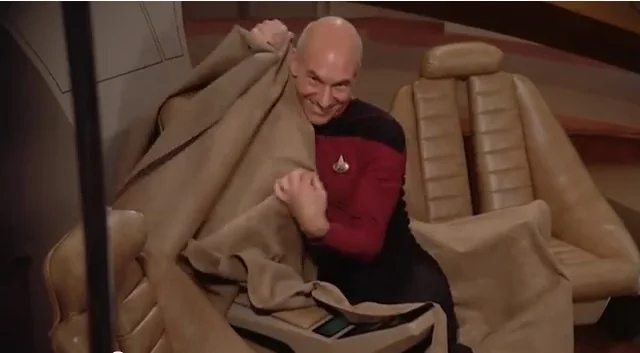
Even science geeks deserve some laughs near the end of the year. Check out this gag reel from the second season of Star Trek: The Next Generation. I picked this up while browsing Jon Wiley's stream on Google+.
One of my favorite parts comes at the 6 minute mark, where two characters Worf and Rikers just can't keep a straight face and the video crew is clearly frustrated. Makes me wonder how long it took to record an entire show.
Happy New Year From Spaaaaaaace!
Commander Kevin Ford and Flight Engineers Chris Hadfield and Tom Marshburn of the International Space Station's Expedition 34 crew send down their best wishes for a happy new year
Scientists Are The New Rockstars: 2012 Edition

It should be obvious that I love science, but I understand and respect that everyone doesn't. Still, people that excel in their craft should be recognized the same way that entertainment stars are. I'm not saying that we should have a "Real Housewives of Science" reality show or have a Kardashian scientist stumbling around labs, but it wouldn't hurt to share in some of that publicity.
To that end, let's check out some of the top scientists of 2012, as reported by the scientific journal Nature. Here is an excerpt that was news to me:
While it's no surprise that women are underrepresented in science, pinning that to discrimination, rather than gender differences in aptitude or interest, has been tricky. But when Yale University microbiologist Jo Handelsman showed that researchers offer fictitious female job applicants about $4,000 less in salary and rate them as less competent and worthy of mentorship than male counterparts, she produced strong evidence for sexual bias. Handelsman says she hasn't personally experienced strong bias, but became motivated to speak out about it when other women scientists described their experiences with sex discrimination.
It's common news that job applicants with ethnic sounding names (hello Shareef Jackson!) get called less for interviews, but it is extremely worrisome that this applies within the science field. Gender discrimination is real and it exists.
To see the full list, check out the entire article on the Mother Nature Network.