Mars: Five Minutes of Funk (Almost)


NASA previously launched the Curiosity Rover to help further explore the terrain of Mars. It's scheduled to land on August 5th and will begin "a two-year study of whether the landing vicinity ever offered an environment favorable for microbial life."

One of the most important parts is the actual landing sequence when Curiosity will approach from space, enter the Martian atmosphere, descend toward the desired target, and land successfully. This is known as "Seven Minutes of Terror", and is the most painful time for the engineers involved as well as space geeks such as myself.  There are plenty of redundant systems on any spacecraft in case there is an electronic failure, but just about everything has to go correct. In honor of "Seven Minutes of Terror", I present "Five Minutes of Funk"


This post on Planetary.org gives a nice summary on the different phases of this sequence, known as EDL (Entry, Descent, Landing). Discovery also has a nice profile, and mentions the following:

Now think about this: the rover weighs — get this — 890 kilograms, nearly a ton. The Mars air is thick enough that engineers have to deal with it, but too thin to bring Curiosity all the way to the surface safely. So they need a heat shield to slow it initially, a parachute to brake even more, and then rocket motors to drop it the rest of the way.

 Check out the video below for more details! 
  

#ScienceLooksGood Only When You Treat Everyone Equally

sciseekclaimtoken-4fe8b836587e7

The above video is the sad attempt by the European Commission to promote gender diversity in the sciences.  What were they thinking? How about you just ... show normal looking women participating in science experiments? They don't have to be doing "cute" things like trying to be fashionable, analyzing makeup, or striking a pose every time the camera is on them. Support women by showing women.

Sometimes I think these marketing companies outthink themselves when they're trying to be creative and come up with a commercial that gains traction. Unfortunately, this particular commercial went viral for the wrong reason.  Whether it's gender diversity, racial diversity, age diversity, or any thing else - we just want to see people that look like us doing what we want to do. That's it.

For better examples of promoting diversity, see WiSE (Women in Science and Engineering) and NSBE (National Society of Black Engineers). Don't forget about Liu Yang, the first Chinese woman in space and a national hero?

Your move, European Commission.

Alan Turing: Cracking Codes and Taking Names


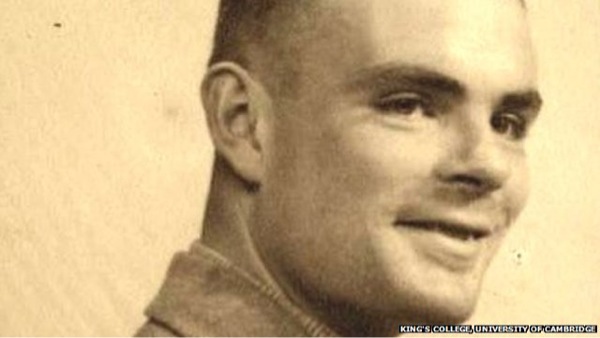
Every time you see a ridiculous movie scene where someone cracks a complex code, think about Alan Turing. He was born 100 years ago today and he's left an impressive legacy. He helped design early computer circuits, including his own Automatic Computing Engine (ACE), which was one of the fastest in the world. Famously, it helped to perform the many precise measurements needed to analyze plane wreckage of the time. He helped cracked the German Engima codes to hamper communication between our enemies in World War 2.

Just in case the machines that he helped design happen to take over the world, Turing also designed his own test to help distinguish between artificial intelligence and human intelligence. If we have a text only interaction with a human and a computer, would we be able to distinguish the two from one another? We incorporate Turing's ideals unconsciously whenever we delete a spam email message for looking too robotic.

Besides, if Google does a Doodle about Turing, he has to be something, right?

#ScienceLooksGood - Space Theme for Your Computer


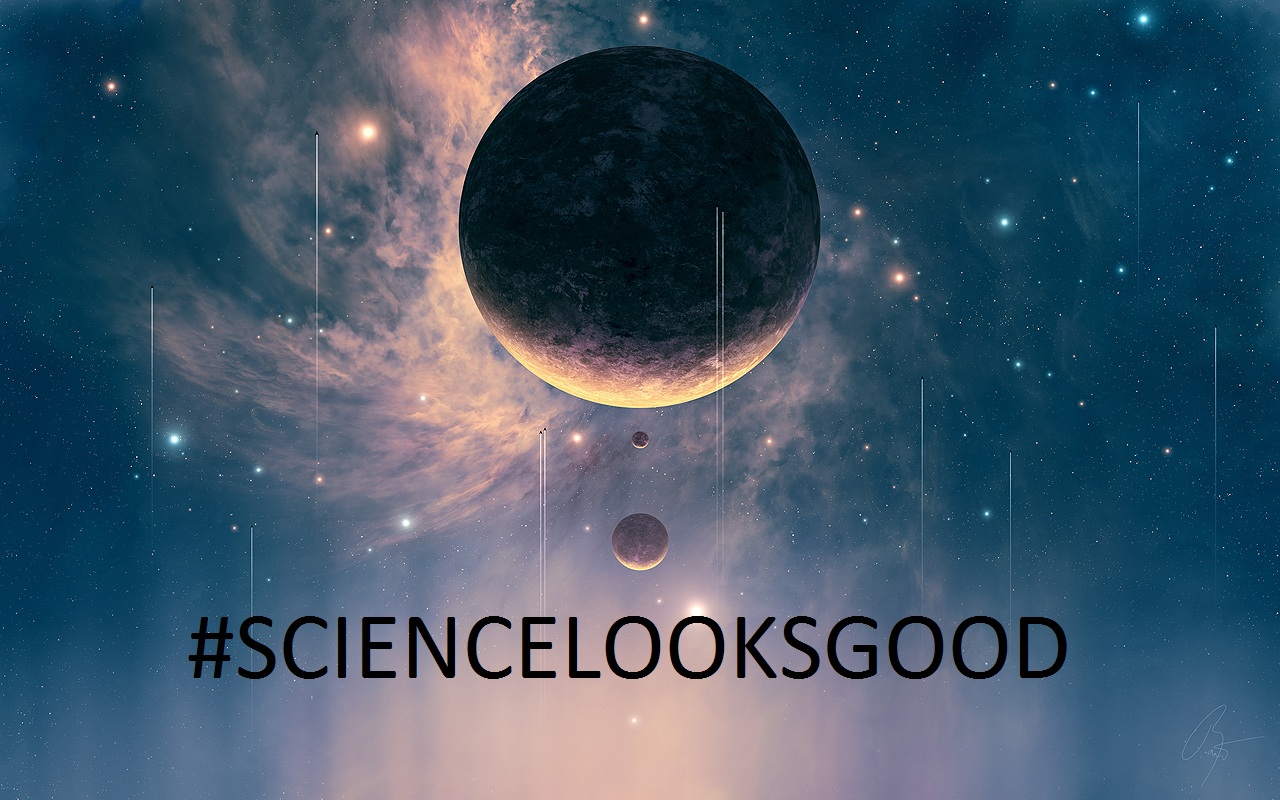
Lifehacker has an amazing space desktop theme available for Windows, MaC, and Linux.  Check out their post here. It includes the above wallpaper plus customized skins and icons to make your desktop look like Spaaaaace! The following are included for Windows:

The Goodnight Tale wallpaper from DeviantArt
The Rainmeter system management and configuration utility for Windows
The Encoded skin for Rainmeter to get the date and weather
The Enigma suite for Rainmeter for the system stats on the right side of the screen
The Google bar for Rainmeter for the search bar in the upper right
StarDock's ObjectDock to replace the Windows taskbar
The Token icon set for the dock at the bottom

Check it out at Lifehacker!