#ScienceLooksGood: Bringing Light to the Dark Universe


The Kennedy Space Center (KSC) is celebrating its 50th anniversary this week. It previously served as the staging area for the Space Shuttle program.  This has helped us to bring light to previously unknown things about the universe, and has enabled us to launch everything from satellites to parts of the International Space Station (ISS) to the Hubble Telescope.

The European Space Agency (ESA) is looking to bring light to the darkness by clearing a mission to  launch the Euclid telescope in 2020. All of the things that we can see with our weak human eyes - planets, stars, people, etc - make up about 4% of the actual universe. The rest of the universe is known as "dark matter" - a substance that only a power telescope can begin to detect.
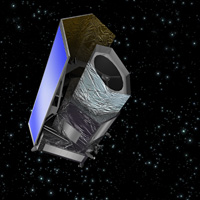


The telescope will capture images for six years - check out the main mission site here.
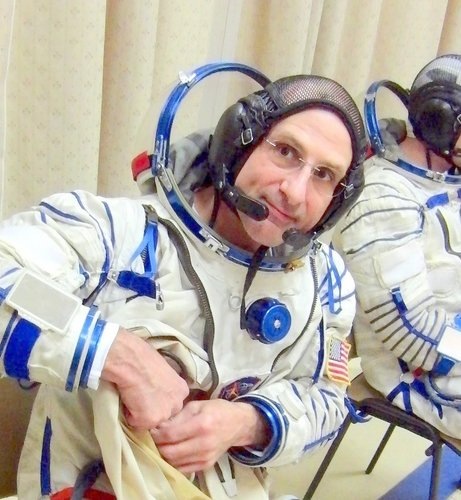
#ScienceLooksGood: Don Petit Returns To Earth


Since the Shuttle program was disbanded last year, the US relies on the Russian Soyuz spacecraft for travel between Earth and the International Space Station (ISS). This weekend, the Soyuz returned to earth, carrying aboard Astronaut Don Petit.

Don is very active on networks including Twitter, Facebook, and Flickr. His Smithsonian Air and Space blog "Letters To Earth" covers more detailed thoughts on the experiments that he performs at the station. Check out the following excerpt from his most recent post:

On Earth, the frontiers opened slowly. The technology of sailing was known and advanced for over a thousand years before the Earth was circumnavigated. Such bold acts require the technology, the will, and the audacity to explore. Sometimes you have one, but not the others.

I only hope that my small efforts here, perhaps adding one grain of sand to the beach of knowledge, will help enable a generation of people in the future to call space “home.”

Well said, Don. I hope that I can someday have the impact of a hero like Don.

One More Flight for Amelia Earhart


75 years ago (1937) was a sad day in history - Amelia Earhart disappeared on her second attempt to fly around the world. A recent press release from The International Group for Historic Aircraft Recovery (TIGHAR) reveals that new technology will finally attempt to gather evidence on what happened with Earhart after that fateful flight. A specialized FedEx process to deliver the parts to ensure everything goes smoothly. All of the details on the expedition can be found on TIGHAR's project page.

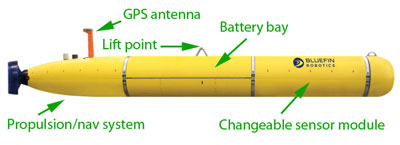
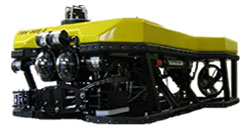
The technology is out of a video game. An Autonomous Underwater Vehicle (AUV) will be sent to map the underwater area and highlight any areas of interest that may be wreckage. A Remote Operated Vehicle (ROV) will then take scans, measurements, and other operations of the target areas. The plan is imagery only - no recovery will be attempted.


Images appear courtesy of TIGHAR.org


Hopefully technology can help us solve what happened to one of our nation's heroes. Let's go!

Keep Up With Tech Without Going Broke

So I blacked out and when I woke up I had a preorder for the new Google Nexus 7 tablet lined up and ready to go. I swear, it's not my fault! Ok, it is. The good news is that I didn't put myself in any financial trouble because I already had the money stashed away for emergency gadget buying.

I prioritize what's important by allocating a large part of my take home pay after bills, savings, and regular expenses to spend on whatever I want. As you can tell by this blog, I love tech and science. So I save this splurge money every paycheck until I find something I want that's tech and science related, so that I can get it with no worries.

This only works if you go cheap on things that you don't really care for. For me, a big chunk of that is for clothes. I wear clothes until they die and don't care much about what's the fashionable wear for this year or season. I also rarely go out and spend massive amounts on drinks or other expenses involving in clubbing. I spend minimally on this and other stuff so that I can splurge on what I love.

Don't go broke ... just adjust your priorities!

Atari: When My Parents Actually Liked Video Games


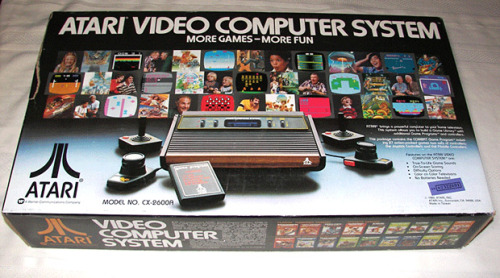
I had an Atari 2600 growing up. It was the last time that my parents were actually interested in the video games that I used to play. I remember my parents watching us play Pac Man, Asteroids, and Space Invaders.  Simple control - whether it's the Atari 2600's joystick and one button or the Wii's motion controlled remote - removes a layer of complexity and allows people that aren't gamers to focus on the action on the screen.

This week, Atari celebrates it's 40th anniversary of its incorporation in 1972.


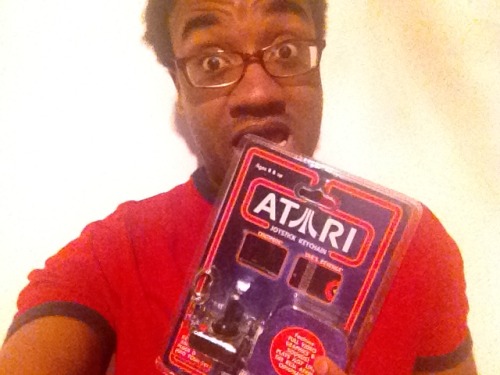
And now, the system that I grew up loving is low tech enough that it can fit completely on a keychain.

 Atari released its 2600 system  in 1977. It was so popular that many companies, whether they were video game companies or not, began releasing games for the system. This was a major factor in the North American video game industry crashing and burning from 1983-85, until the release of Japan's Nintendo Entertainment System.  The good news about the crash? My lower-middle class family could easily afford an Atari 2600 and several $1 cartridges, since the system was a bit long in the tooth when I was of age in the 80s.

I didn't get an NES until way until it's life cycle because I loved the Atari 2600, and I always had a constant supply of games coming because they were so cheap.  In comparison, NES games were expensive and could be hard to find because the system was so popular.

Check out Time's interview with Atari founder Nolan Bushnell, including some interesting conversations with a young, arrogant Atari employee named Steve Jobs.